
Rheology Modifiers in Coatings Explained: How They Control Flow and Viscosity
Rheology modifiers in coatings play a crucial role in controlling viscosity, flow behavior, and stability of coating formulations. These additives help manufacturers maintain the right balance between coating application properties and storage stability. Without proper rheology control, coatings may suffer from sagging, poor leveling, or inconsistent application.
Viscosity Control
Rheology modifiers control the thickness and flow behavior of coating formulations.
Application Performance
They help coatings apply smoothly without sagging or dripping.
Stability
Proper rheology control helps prevent pigment settling during storage.
What Is Rheology in Coatings?
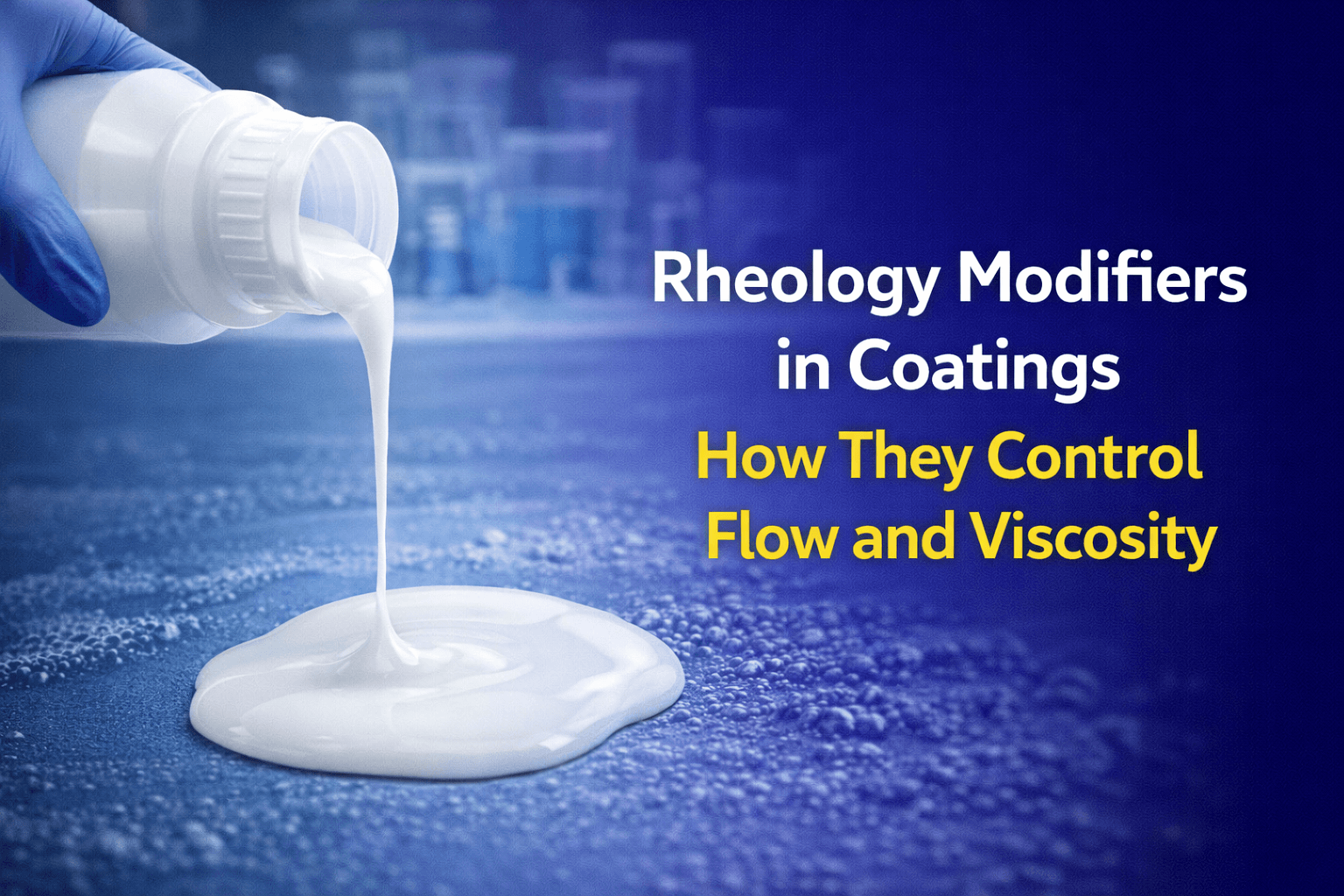
Rheology refers to the flow and deformation behavior of materials. In coating formulations, rheology describes how the coating flows during mixing, storage, and application.
The viscosity of a coating must be carefully controlled to ensure smooth application and stable formulation behavior. If the coating is too thick, it becomes difficult to apply. If it is too thin, it may sag or drip from surfaces.
Why Rheology Control Is Important
Proper rheology control is essential for achieving consistent coating performance and preventing common coating defects.
Common problems caused by poor rheology control
- Sagging on vertical surfaces
- Poor leveling
- Pigment settling
- Inconsistent coating thickness
- Difficult application
How Rheology Modifiers Work
Rheology modifiers work by interacting with the liquid coating system to change its viscosity and flow characteristics. These additives can create a structured network within the coating that helps control movement of pigments and particles.
Specialized rheology additives for coatings are commonly used to improve formulation stability and application behavior.
Types of Rheology Modifiers Used in Coatings
| Type | Characteristics | Typical Use |
|---|---|---|
| Cellulose-based thickeners | Water soluble thickening agents | Architectural paints |
| Polyurethane thickeners | Provide shear-thinning behavior | Water-based coatings |
| Clay-based rheology modifiers | Provide structural viscosity | Industrial coatings |
Applications in Industrial Coatings
Rheology modifiers are widely used in coating formulations where stable viscosity and controlled flow are important.
Conclusion
Rheology modifiers in coatings play a key role in controlling viscosity and improving application performance. By managing how coatings flow and behave during application, these additives help manufacturers produce coatings with consistent quality and reliable performance.
Explore Rheology Additives for Coatings
Discover additives designed to improve viscosity control and coating stability.
Frequently Asked Questions
Rheology modifiers are additives that control viscosity and flow behavior of coating formulations.
They help prevent sagging, improve leveling, and maintain stable viscosity during storage and application.
They are used in architectural paints, industrial coatings, automotive coatings, and protective coatings.