
Supplier Selection Guide How Paint Manufacturers Should Choose a Paint Additives Supplier The right paint additives supplier should do more than quote a product and price. Additives can influence dispersion, viscosity, foam, surface appearance, adhesion, storage stability and production efficiency, so supplier selection should consider technical fit, consistency and formulation support as well as commercial […]
Additive Selection Guide Wetting Agent vs Surfactant vs Dispersing Additive: What’s the Difference? Wetting agents, surfactants and dispersing additives are often discussed together because all can influence interfaces within a coating. However, they are not interchangeable. Understanding what each term means helps formulators select the right chemistry for wetting, pigment dispersion and long-term stabilization. Technical […]
Pigment Concentrate Guide How to Reduce Viscosity Without Losing Color Strength in Pigment Concentrates Lowering pigment concentrate viscosity is useful only if color strength, shade, gloss and storage stability remain acceptable. The goal is not simply to make the mill base thinner—it is to reduce uncontrolled pigment interaction while preserving efficient pigment development. Technical Guide […]
Paint Formulation Troubleshooting Common Paint Formulation Problems and the Additives That Help Solve Them Foam, pigment settling, high viscosity, poor color development, craters, orange peel, sagging and adhesion failure can look like separate coating problems. In practice, each defect can have multiple root causes, which is why successful troubleshooting begins with diagnosis—not simply adding more […]
Adhesion Selection Guide Adhesion Promoter for Metal vs Plastic Coatings: What Changes in Additive Selection? Metal and plastic surfaces create very different adhesion challenges. Metal coatings often need to interact with oxide layers or pretreated surfaces, while plastics can present low surface energy, chemical inertness and contamination from molding or processing. Technical Guide Metal Coatings […]
High Pigment Loading Guide How Hyperdispersants Reduce Viscosity in High Pigment Loading Formulations Increasing pigment loading can quickly increase mill-base viscosity and make grinding, pumping and application more difficult. Effective hyperdispersant selection can reduce pigment-pigment interaction and help formulators achieve more efficient pigment stabilization at demanding solids levels. Technical Guide Hyperdispersant Additives High Pigment Loading […]
Rheology & Storage Stability How to Prevent Pigment Settling and Sedimentation in Paints Pigment settling can create hard sediment, inconsistent color, difficult redispersion and storage-stability problems. Preventing it requires balancing particle dispersion, rheology and formulation structure without making the coating unnecessarily thick. Technical Guide Anti-Settling Additives Paints & Coatings Explore Coating Additives Discuss Your Formulation […]
Pigment Dispersion Guide Wetting and Dispersing Agents for Coatings: How They Improve Pigment Stability Pigment dispersion affects much more than how easily a pigment mixes into a coating. Proper wetting and stabilization can influence viscosity, color development, gloss, storage stability and the overall consistency of the finished formulation. Technical Guide Pigment Dispersion Paint & Coatings […]
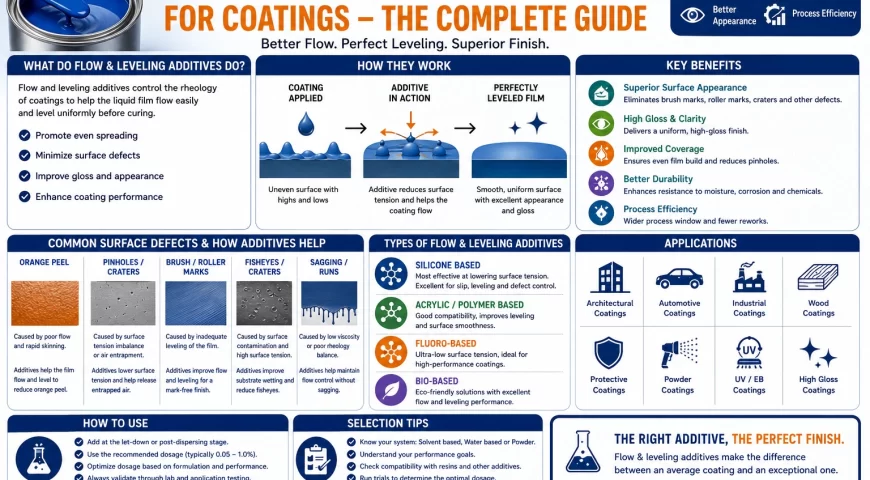
Surface Additives Flow Additive vs Leveling Additive: Key Difference in Paints and Coatings Flow additives and leveling additives both improve coating appearance, but they solve slightly different surface problems. Understanding the difference helps coating manufacturers reduce orange peel, brush marks, roller marks, craters, poor smoothness and uneven film formation. Request Product Guidance Explore Flow & […]
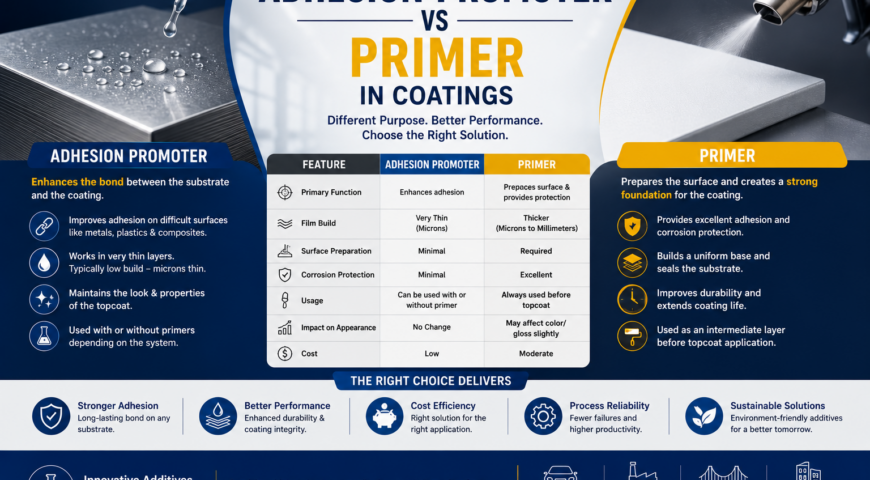
Adhesion Additives Adhesion Promoter vs Primer: What Coating Manufacturers Should Know Adhesion promoters and primers both help improve coating adhesion, but they are not the same. Understanding the difference helps formulators choose the right approach for metal, plastic, glass, wood, concrete and other difficult substrates. Request Product Guidance Explore Adhesion Promoters Overview Why adhesion support […]