
Rheology & Storage Stability How to Prevent Pigment Settling and Sedimentation in Paints Pigment settling can create hard sediment, inconsistent color, difficult redispersion and storage-stability problems. Preventing it requires balancing particle dispersion, rheology and formulation structure without making the coating unnecessarily thick. Technical Guide Anti-Settling Additives Paints & Coatings Explore Coating Additives Discuss Your Formulation […]
Adhesion & Substrate Guide Adhesion Promoters for Coatings: Choosing the Right Additive for Metal, Plastic and Difficult Substrates Adhesion failure can occur even when the coating itself has good mechanical and surface properties. The interaction between substrate, binder and coating chemistry must be strong enough to maintain adhesion during application and service. Technical Guide Adhesion […]
Advanced Pigment Dispersion Hyperdispersant Additives for Carbon Black and Difficult Organic Pigments Carbon black and many organic pigments can be challenging to disperse because of their high surface area and strong tendency toward particle interaction. Hyperdispersant additives can help formulators stabilize these demanding pigment systems while managing viscosity, color development and pigment loading. Technical Guide […]
Pigment Dispersion Guide Wetting and Dispersing Agents for Coatings: How They Improve Pigment Stability Pigment dispersion affects much more than how easily a pigment mixes into a coating. Proper wetting and stabilization can influence viscosity, color development, gloss, storage stability and the overall consistency of the finished formulation. Technical Guide Pigment Dispersion Paint & Coatings […]
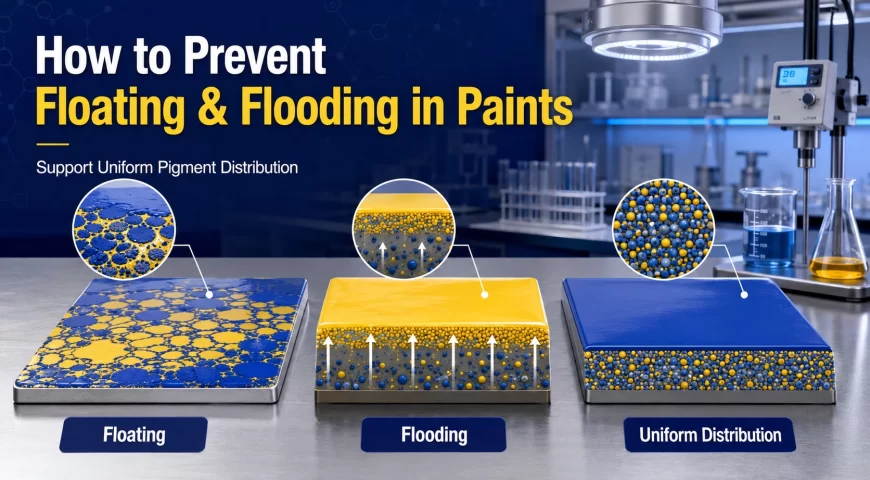
Pigment Stability Guide How to Prevent Floating and Flooding in Paints Floating and flooding are paint defects where pigments separate, migrate or appear unevenly distributed in the coating film. These issues can cause shade variation, patchy color, poor appearance and inconsistent batch performance. Suitable wetting, dispersing and pigment stabilization additives help reduce these problems. Request […]
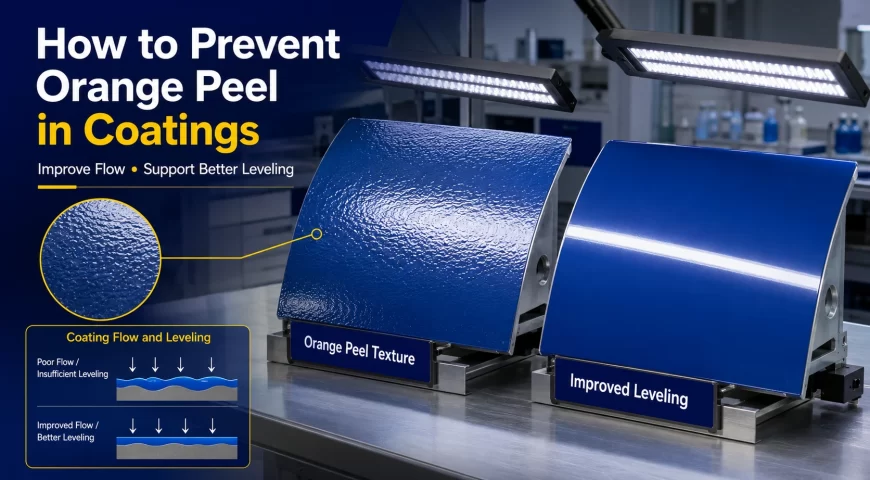
Coating Surface Defect Guide How to Prevent Orange Peel in Coatings Orange peel is a common coating surface defect where the dried film looks uneven, textured or similar to the surface of an orange. It can affect gloss, smoothness, appearance and perceived coating quality. The right flow and leveling additive, rheology balance and application control […]
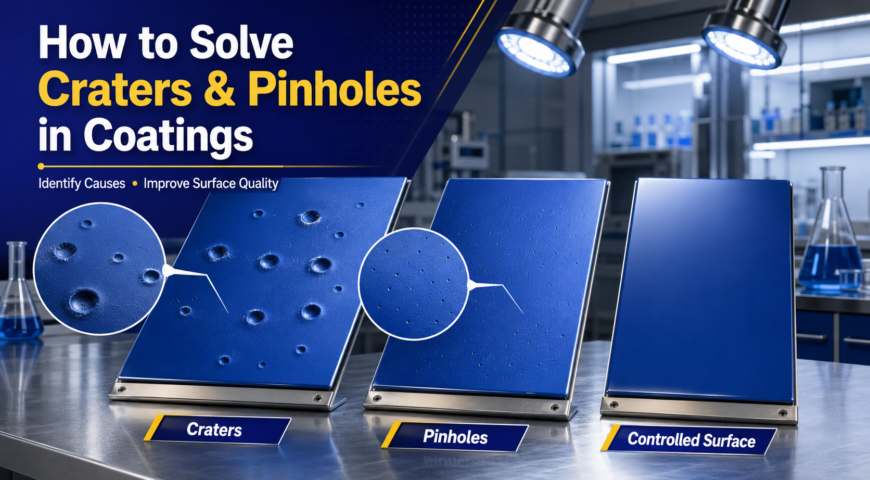
Coating Surface Defect Guide How to Solve Craters and Pinholes in Coatings Craters and pinholes are common coating surface defects that can affect appearance, protection, adhesion and film quality. These defects are often linked to foam, air entrapment, poor wetting, contamination, incorrect additive selection or poor surface flow. Request Additive Guidance Explore Antifoam Additives Overview […]

Industrial Coating Foam Control How to Prevent Foam in Industrial Coatings Foam in industrial coatings can cause poor surface finish, craters, pinholes, air entrapment, reduced film performance and production delays. The right antifoam or defoamer additive helps control foam during manufacturing, mixing, filling and application. Request Antifoam Guidance Explore Antifoam Additives Overview Why foam control […]
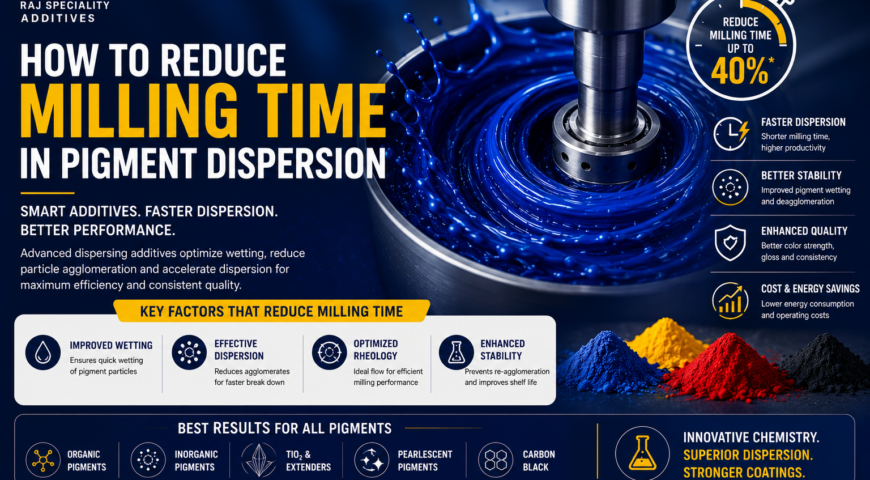
Pigment Dispersion Guide How to Reduce Milling Time in Pigment Dispersion Milling time is a major factor in pigment dispersion efficiency, production cost and batch consistency. The right dispersing additives and hyperdispersants can help improve pigment wetting, reduce mill base viscosity, speed up dispersion and support long-term stability. Request Product Guidance Explore Dispersing Additives Overview […]

Pigment Dispersion Guide How to Improve Gloss and Color Strength in Paints Using Dispersing Additives Gloss and color strength in paints are strongly influenced by pigment wetting, particle separation, dispersion stability and formulation compatibility. The right dispersing additive helps pigments perform better and improves final paint appearance. Request Product Guidance Explore Wetting & Dispersing Agents […]